
Train Navigator

8 mins
March 1, 2026
There's a moment on almost every hiking trip where I think the same thing: this is why I do this. Standing somewhere remote and wild, boots worn in, lungs full of clean air, and in the back of my mind the quiet satisfaction of knowing I got here without sitting in traffic or circling a car park for 20 minutes.
The UK has some of the most dramatic, varied and genuinely beautiful walking country in the world. And the best-kept secret? You don't need a car to reach most of it.
Whether it's a windswept ridge in the Scottish Highlands, a mist-covered valley in Snowdonia, or a limestone gorge in the Yorkshire Dales, there's a train that can get you there. Here are the best hiking bases in the UK you can reach entirely by public transport.
It's a fair question. The UK isn't always synonymous with smooth public transport, especially outside major cities. But for hiking? The train network actually covers some of the best terrain in the country and often routes through landscapes that are just as stunning as the hikes themselves.
Beyond the practicalities, there's something genuinely freeing about it. No designated driver. No stress about getting back before dark to beat a long drive home. You walk as far as you like, pick up a train at the other end, and let someone else handle the journey. It's slower travel in the best possible sense.
And for the hills and moorlands that draw walkers here in the first place, leaving the car behind isn't a compromise. It's the point.
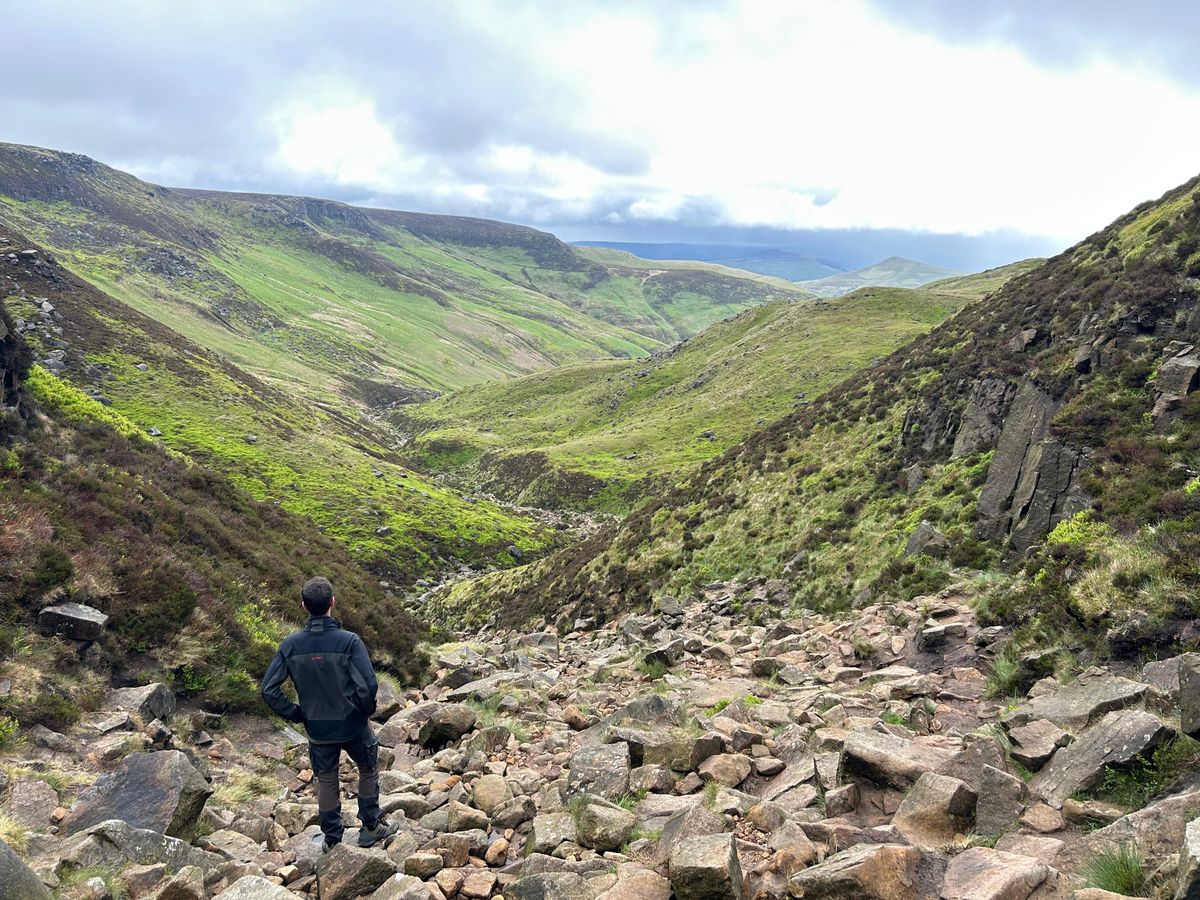
If you want proof that car-free hiking in the UK is genuinely world-class, start here. Edale is a tiny, tucked-away village at the foot of Kinder Scout (the highest point in the Peak District) and the station sits almost directly at the trailhead. You step off the train, lace up your boots, and you're walking within minutes. It really is that easy.
The hiking here is exceptional. Kinder Scout offers a full-day loop with serious elevation, gritstone scrambling, and plateau moorland that feels genuinely remote. Mam Tor, a short hike away, rewards you with panoramic views over the Hope and Edale valleys from a ridge that stretches on and on. For something wilder, Bamford and Stanage Edge (just one stop along the same line) offer dramatic gritstone cliffs, open ridges, and the almost-mythical Robin Hood's Cave.
The Old Nags Head in Edale is the perfect last stop before the train home. Their veggie chilli is not to be missed.
Edale also carries a sense of history that adds real weight to every walk. This is where the 1932 Mass Trespass took place, when hundreds of ramblers climbed Kinder Scout to protest landowners blocking public access to moorland. It's no exaggeration to say that walk helped change UK law. The right to roam, enshrined decades later, was won in part right here.
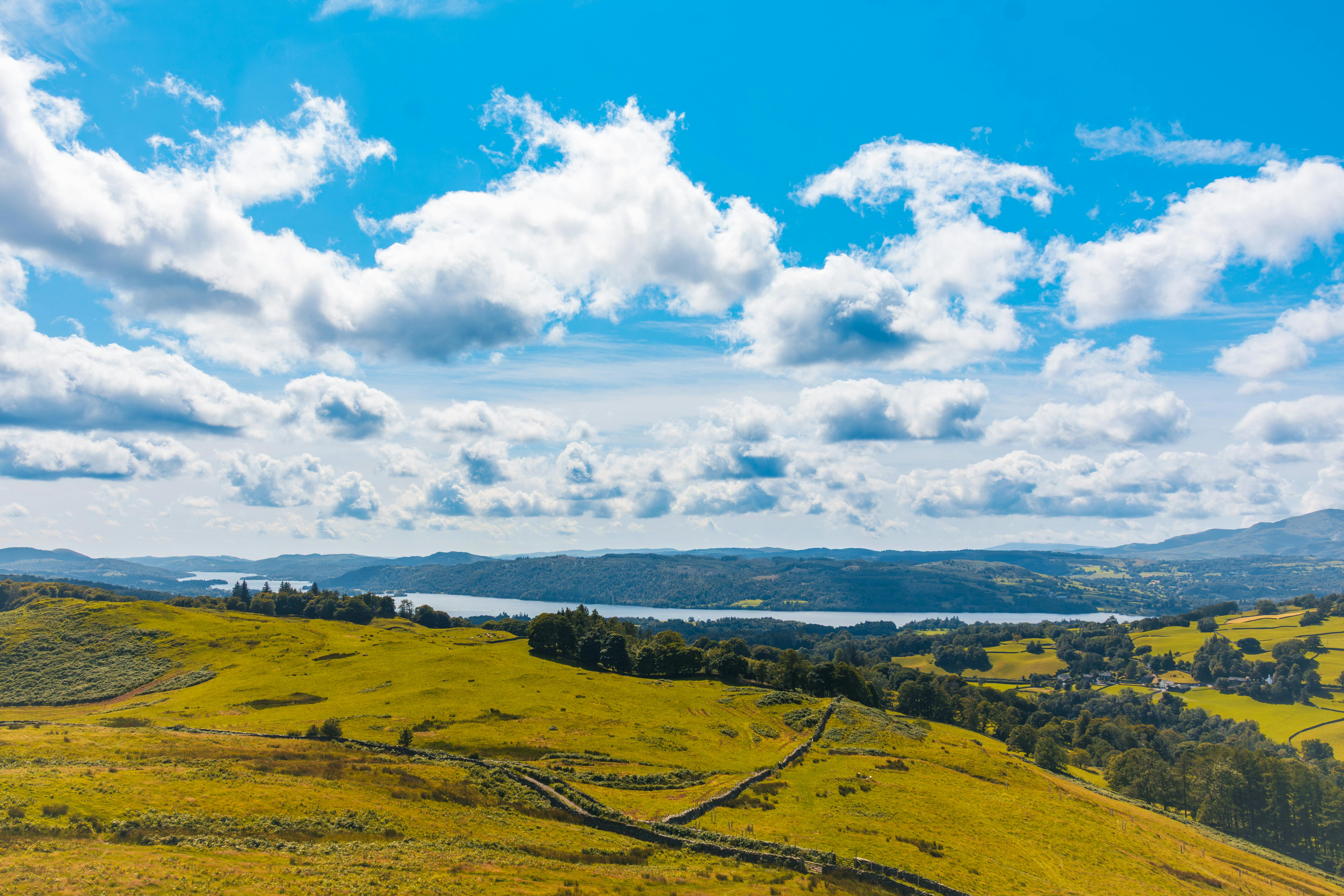
The Lake District is England's most visited national park, and for good reason. But it's also one that too many people see through a car window. The train into Windermere drops you right at the edge of it, and from there the options are extraordinary.
Windermere is a lovely base, but Ambleside (a short bus ride away) gives you better access to the central fells. From here you can walk to the Langdale Pikes for a full day of ridge hiking, take on the classic Fairfield Horseshoe (a 17 km loop with around 900 m of ascent), or head out to Loughrigg Fell for something gentler with views that'll stop you in your tracks.
The approach to Great Langdale on a clear morning is one of the finest walking scenes in England. Valley floor, dry stone walls, and the sharp outline of the Pikes above. There's a reason Wordsworth lived here.
One practical note worth knowing: bus connections from Windermere into the central fells are seasonal and can be infrequent. The 516 Langdale Rambler bus runs in summer and is your key link west, so it's well worth building your itinerary around it.
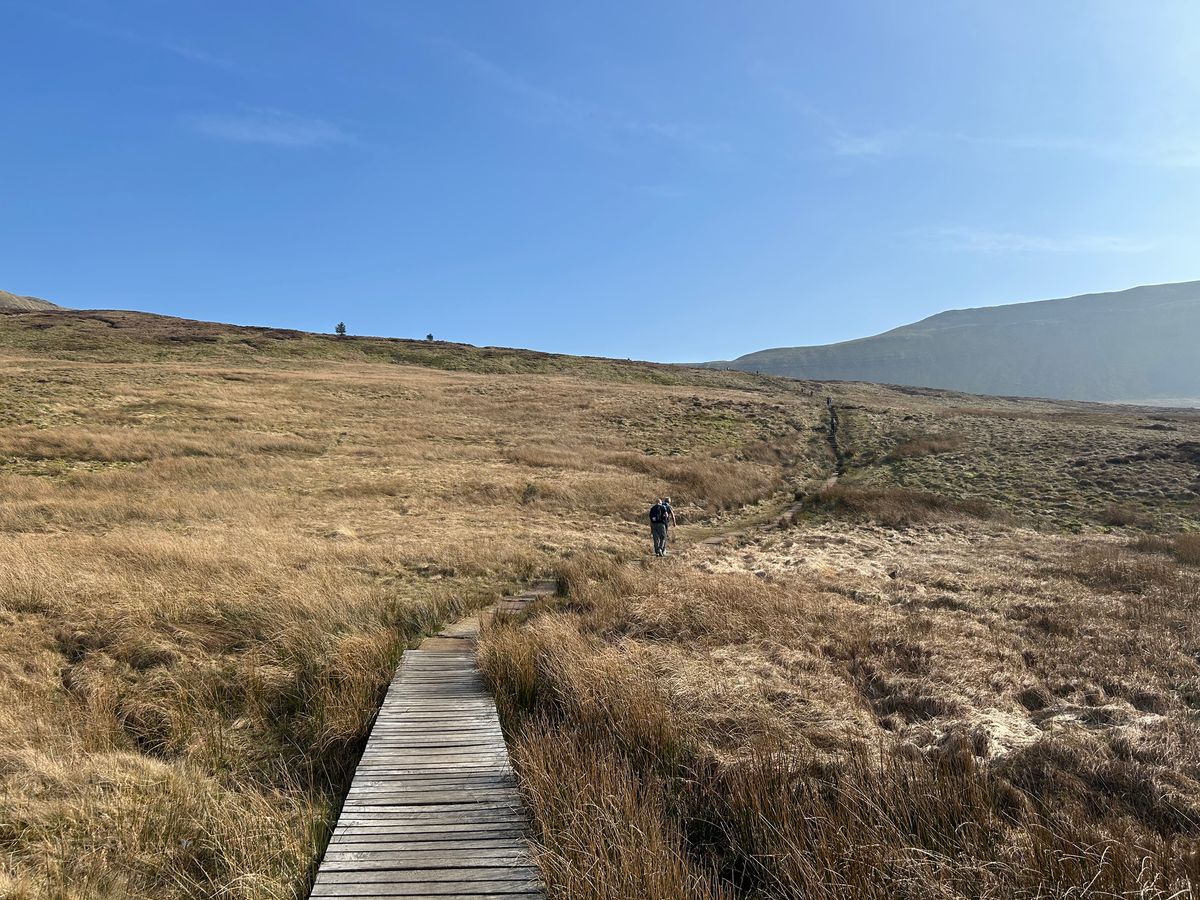
The Settle-Carlisle line is one of the great railway journeys in the UK in its own right. Dramatic viaducts, open moorland, and a wonderful sense that you're travelling somewhere genuinely remote. Horton-in-Ribblesdale sits on it, a small village that punches well above its weight as a hiking base.
This is Three Peaks country. Pen-y-Ghent (694 m), Whernside (736 m) and Ingleborough (723 m) form the famous Yorkshire Three Peaks circuit, a 39 km route with around 1,600 m of ascent that many walkers take on in a single day. Most routes begin and end in Horton, meaning the train deposits you exactly where you need to be. It's wonderfully convenient.
If the full Three Peaks circuit feels like too much for one day, each summit makes for an outstanding individual walk. Pen-y-Ghent is the most accessible from the village and gives you a proper fell-walking experience in under 12 km, with a mix of paved trail, boggy moorland, and a short rocky scramble near the top.
The Crown Hotel in Horton is the traditional start and end point for Three Peaks attempts, and they still stamp walkers' cards at the bar for the classic challenge. That alone is worth the trip.
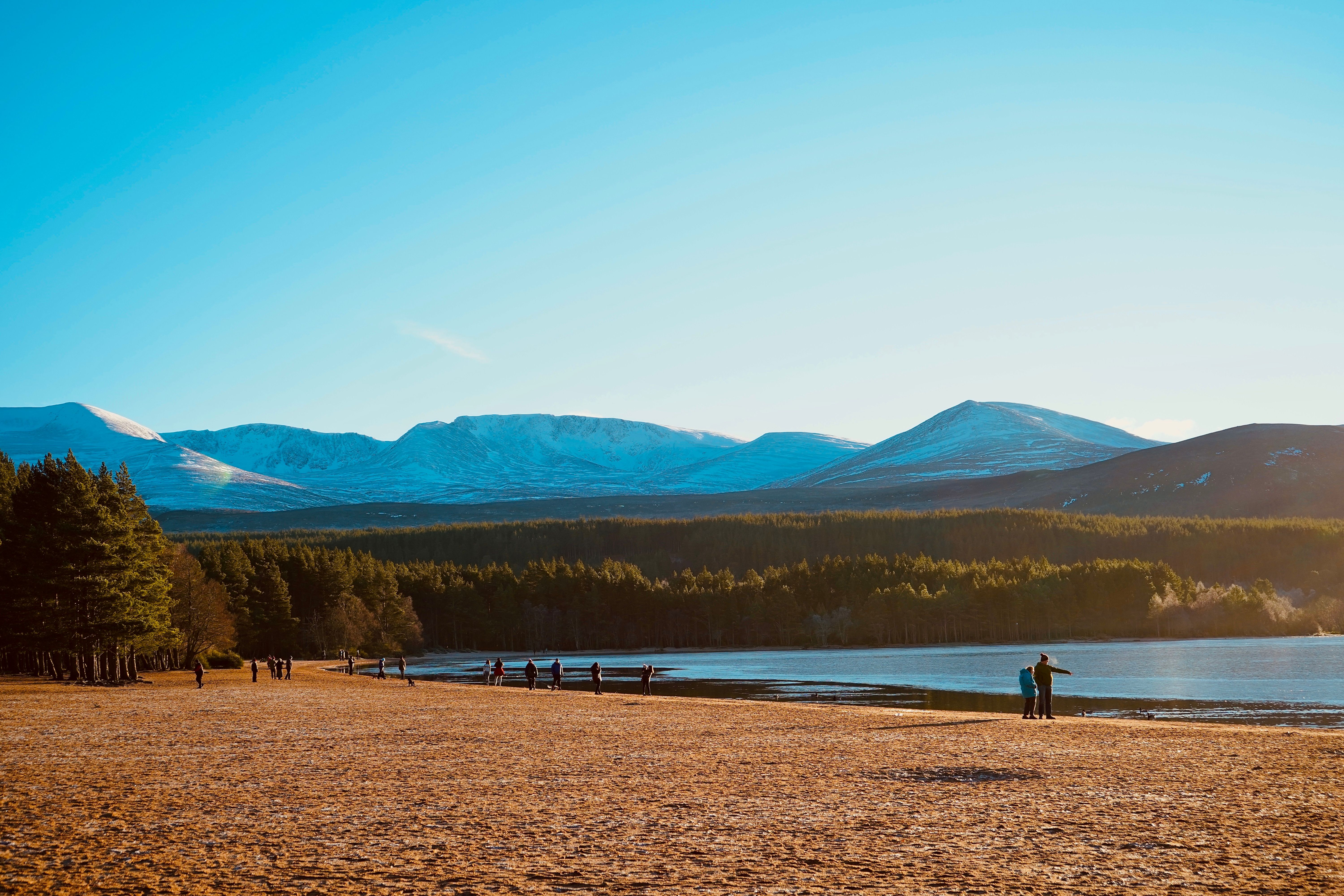
Scotland's hiking credentials need little introduction, but getting into the good stuff without a car can feel daunting. Aviemore changes that entirely. The town sits inside the Cairngorms National Park (the UK's largest) and has a proper train station with regular services from both Edinburgh and Inverness, plus the Caledonian Sleeper from London.
The Cairngorms are unlike anything else in the UK. This is a high Arctic plateau, the largest area of land above 1,000 m in Britain, and the walking reflects that. Cairn Gorm itself (1,245 m) can be approached on foot via the Windy Ridge or Northern Corries routes. The Lairig Ghru is a legendary long-distance mountain pass through the heart of the range, while the Chalamain Gap offers something shorter but still dramatic and well worth your time.
Summer days here can feel almost endless, with the plateau bathed in golden light well into the evening. Winter, by contrast, is genuinely Arctic. The Cairngorms receive more snow than almost anywhere else in Britain and require full winter mountaineering equipment in the colder months. Plan accordingly and always check conditions before you head out.
Aviemore itself has a good range of accommodation, gear shops and places to eat. It's a proper outdoor sports town rather than just a transport stop, and the Old Bridge Inn is a favourite post-walk spot for good reason.

Wales is often the overlooked entry in the UK hiking conversation, and yet its national parks rank among the finest in Britain. Abergavenny is the gateway to the Brecon Beacons and has a train station that makes it genuinely easy to reach from South Wales and the West Midlands.
The Brecon Beacons are plateau mountains with long, sweeping ridges, grassy summits and steep northern escarpments. The walking feels different here compared to the craggy drama of Snowdonia or the Scottish Highlands. It's wider and more open, with a real sense of space. Pen y Fan (886 m) is the highest point and the most popular walk, a return trip of around 12 km from the Storey Arms (reachable by bus from Brecon). The summit ridge, with the sheer north face dropping away in front of you, is one of the great moments in Welsh hiking.
There's also the Sugarloaf (596 m), which rises steeply just a few miles from Abergavenny station and offers a shorter but very rewarding walk with great views over the Usk Valley. It's a perfect option if you arrive in the afternoon and want to make the most of the day.
Abergavenny itself is a proper market town with good food and independent pubs. The Hardwick nearby is one of the best gastropubs in Wales, and a very good reason to stay an extra night if you can manage it.
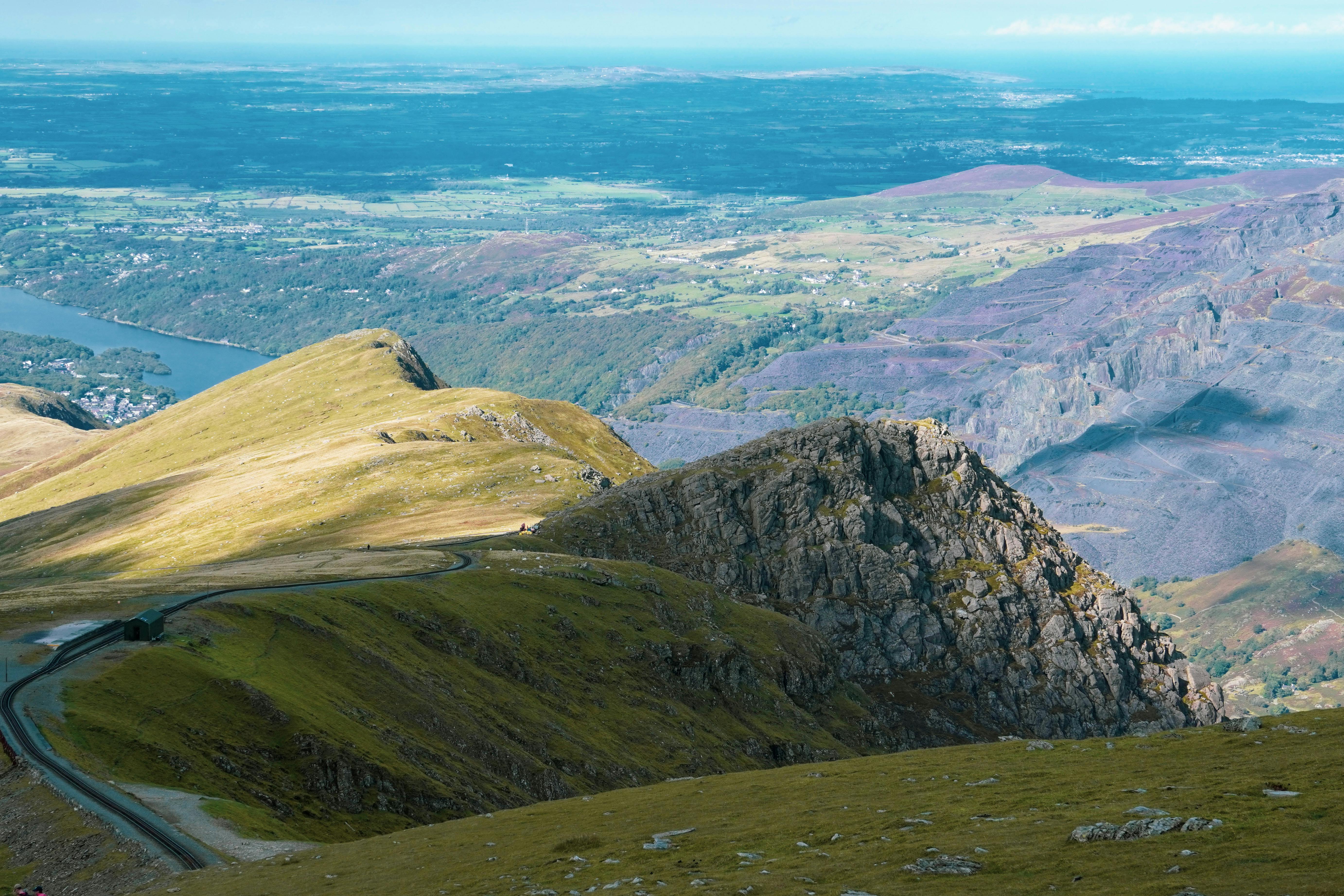
Snowdonia is dramatic in a way that catches you off guard, even if you've seen the photos. The mountains here are shapely and steep, proper peaks rather than rounded hills, and the valleys between them feel deep and enclosed. Betws-y-Coed, tucked into the Conwy Valley at the edge of the national park, is the most accessible base by train.
From here, the Conwy Valley line gives you access to Pont y Pant, Dolwyddelan and Blaenau Ffestiniog, each a starting point for walks into the hills. For Snowdon itself (1,085 m, the highest point in Wales and the highest peak anywhere in England or Wales), a local bus service from Betws-y-Coed connects to Pen-y-Pass and Llanberis, where the main trails begin. The Pyg Track and Miners' Track both offer outstanding routes to the summit with views that are hard to put into words.
The Swallow Falls, just outside the village, are well worth a visit if you're passing through. A beautiful series of cascades on the Afon Llugwy, they're especially impressive after rain. And after a long day in the mountains, the village has enough good pubs and cafes to make recovery very comfortable. The Ty Gwyn Hotel, a 16th-century coaching inn, is particularly lovely.
One thing worth knowing: Snowdonia can be exceptionally busy in peak season, especially on the Snowdon summit trails. Coming mid-week or in shoulder season (May or October) will give you a very different experience, and a much quieter one.
What strikes me most about this list is the range. In a single country, you can walk across an Arctic plateau, scramble up a peak that looks out over half of Britain, or wander through valleys that feel unchanged since the Romantics wrote poems about them. And you can do all of it on a train ticket.
Going car-free doesn't just simplify the logistics. It genuinely changes the texture of the trip. You're not watching the landscape scroll past through a windscreen. You arrive into it, on foot, carrying everything you need. The journey becomes part of the adventure. The Caledonian Sleeper pulling into Fort William at dawn. The Settle-Carlisle line climbing into the Dales with Pen-y-Ghent on the horizon. The Conwy Valley line winding through the woods with the mountains appearing above the treeline.
These are experiences that a motorway simply can't give you.
So wherever you are in the UK, or wherever you're travelling from, pick a base, check the timetable, and go. The trail starts at the station. For a list of hikes accessible directly by public transport, check out our database

A four-day village-to-village hike through Germany and Czech Republic's stunning winter sandstone landscapes

A 4-Day Journey through the Forests, Castles, and Vineyards of Baden-Baden

Conquer the High Tatras' Highest Peak on an Accessible Day Hike

A 3-Day Adventure in the Swiss Alps

Have you ever walked across the bottom of the sea? In the Netherlands, you can.

How We Hiked Kinder Scout, Mam Tor & Stanage Edge Without Renting a Car
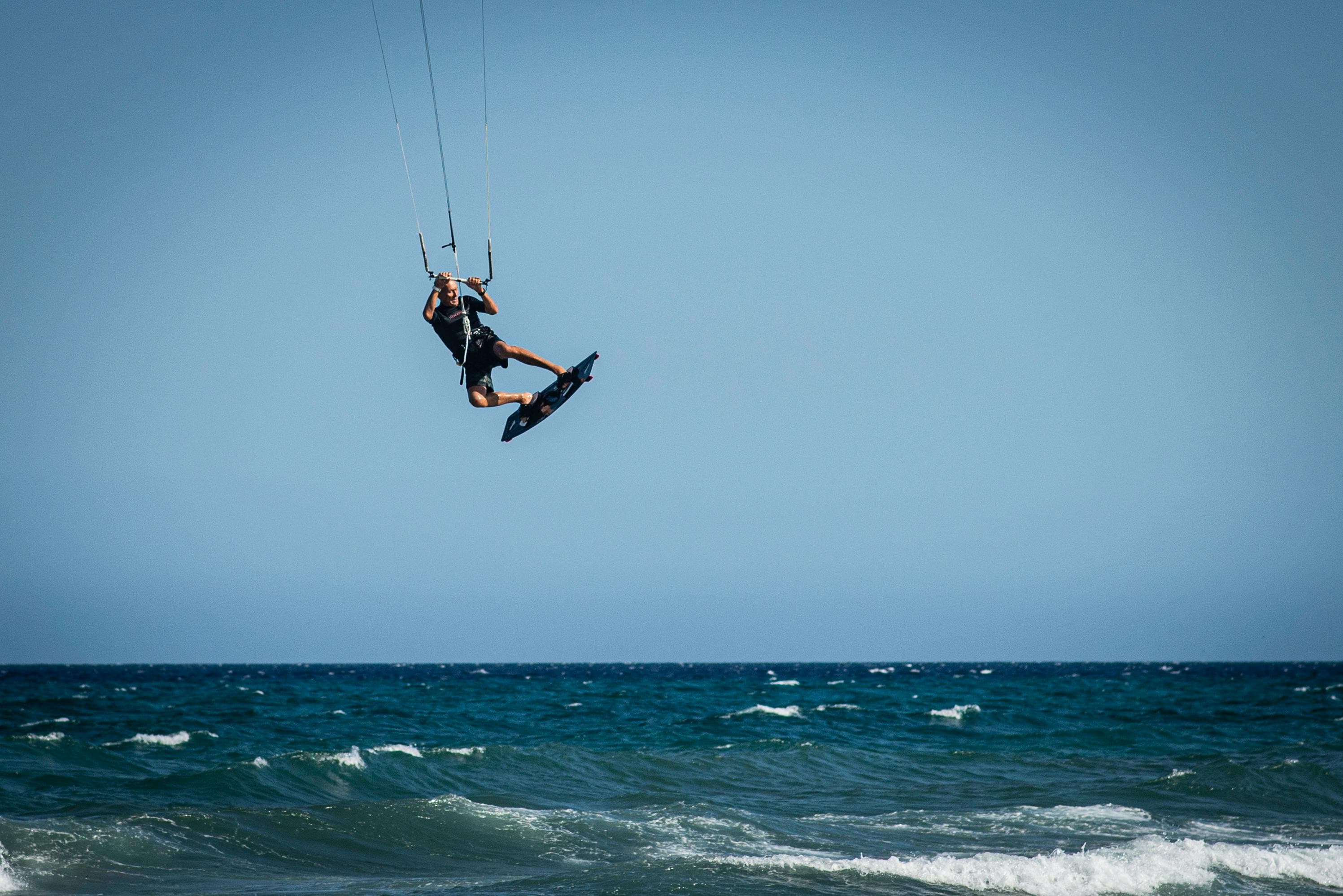
From the North Sea dunes of the Netherlands to the coasts of Wales and Denmark, chase the wind sustainably by rail
Explore by Activity
Hiking
Skiing & Snowboarding
Beach & Surfing
Explore by Country