
Train Navigator

7 mins
February 15, 2026
The sandstone peaks of Saxon Switzerland (Germany) and Bohemian Switzerland (Czech Republic) are stunning in any season, but winter gives the landscape a unique edge. Geographically, the two parks form a continuous sandstone massif carved over millions of years by the Elbe River. The landscape is a mix of deep gorges, narrow rock corridors, tabletop plateaus and jagged towers that look almost volcanic even though they were shaped by erosion.
The German side, Saxon Switzerland, is dense with ladders, rocky staircases and exposed viewpoints, while the Czech side, Bohemian Switzerland, opens into wider forests, high cliffs and dramatic natural arches like Pravčicka Brána. Because the border runs straight through the formation, the ecosystem feels unified even though the signage, infrastructure and trail style change once you cross into Czechia. This makes the region unusually compact for multi-day hiking and easy to explore on foot without long transfers.
This guide gives you planning details, winter gear advice, transport logistics for a four day village-to-village hike and expanded route notes so you can go from "thinking about it" to "booking tickets."
Reaching the region is straightforward thanks to the European Sleeper, which runs an overnight connection from Brussels with stops in major cities like Brussels, Rotterdam, The Hague, and Amsterdam.
After boarding the train, you sleep your way across Germany and wake up directly at the gateway of this national park in either Bad Schandau for Saxon Switzerland National Park in Germany or Decin for Bohemian Switzerland National Park. From here you can reach trailheads, ferries and villages without needing a car.
Winter service on these lines is reliable, which makes the whole trip easy to plan around.
For our four-day village-to-village hike, we decided to get off in Bad Schandau on the European Sleeper and boarded the train back to the Netherlands from Děčín four days later.
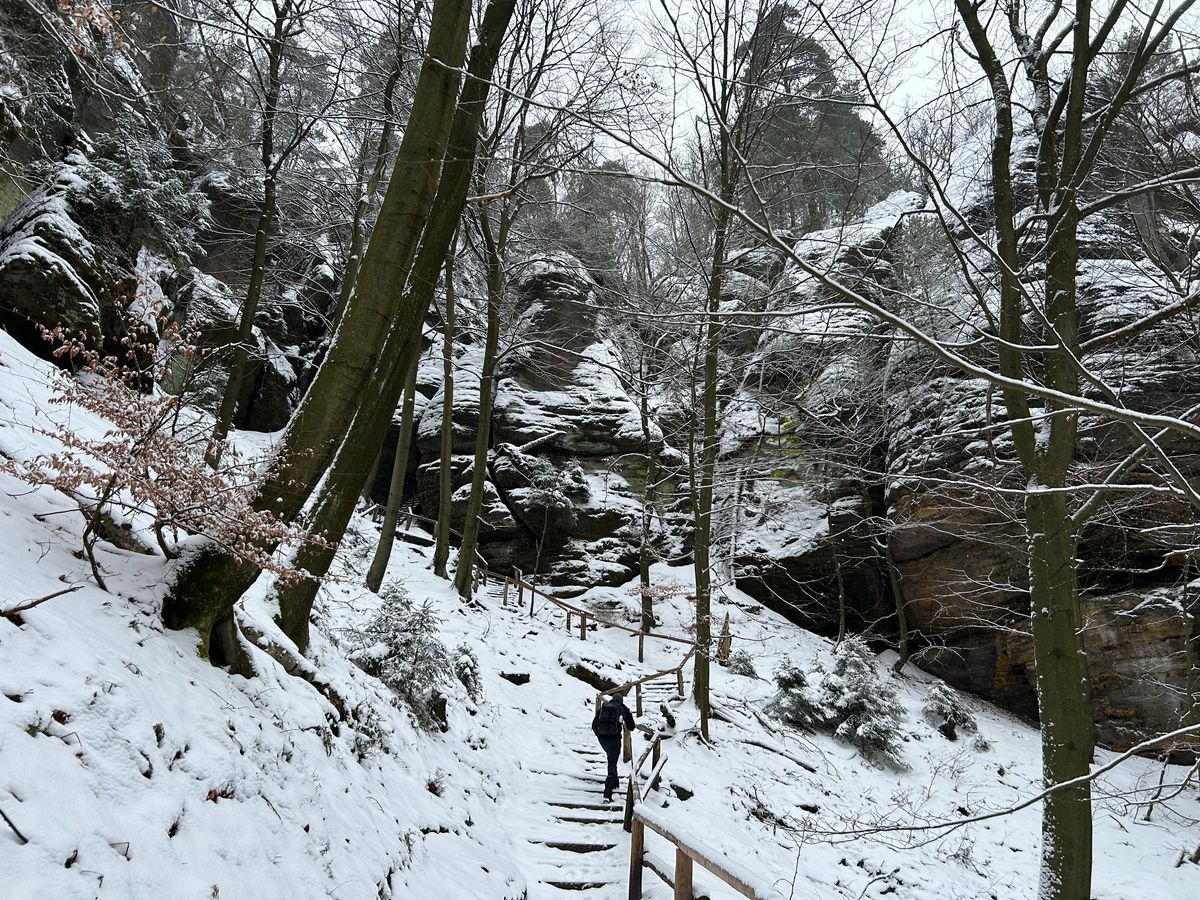
We started the day with the quick train from Bad Schandau to Rathen. It took only a few minutes, but it already felt like we were slipping out of everyday routine. From the station we walked down to the Elbe, where the small ferry pushed across the river in the cold morning light. It runs all year and costs about EUR 1.50. The moment we stepped off on the far bank, the hike began in earnest.
The terrain changed fast. One moment we were on a flat riverside path, and the next we were climbing rocky staircases into the sandstone cliffs. Winter sharpened the air and stripped away the crowds, leaving the place quiet and open.
The climb to the Bastei Bridge lived up to its reputation. Some of the steps were glazed with ice, so we pulled on our microspikes early. They weren't essential, but they gave us more confidence on the steeper sections. Reaching the bridge in winter was the real payoff. Instead of the usual traffic, we had long stretches of silence and wide views of sandstone towers fading into the cold morning haze.
Stats: ~19 km | +790m | 6 - 7 hrs | Difficulty: Medium | View Route
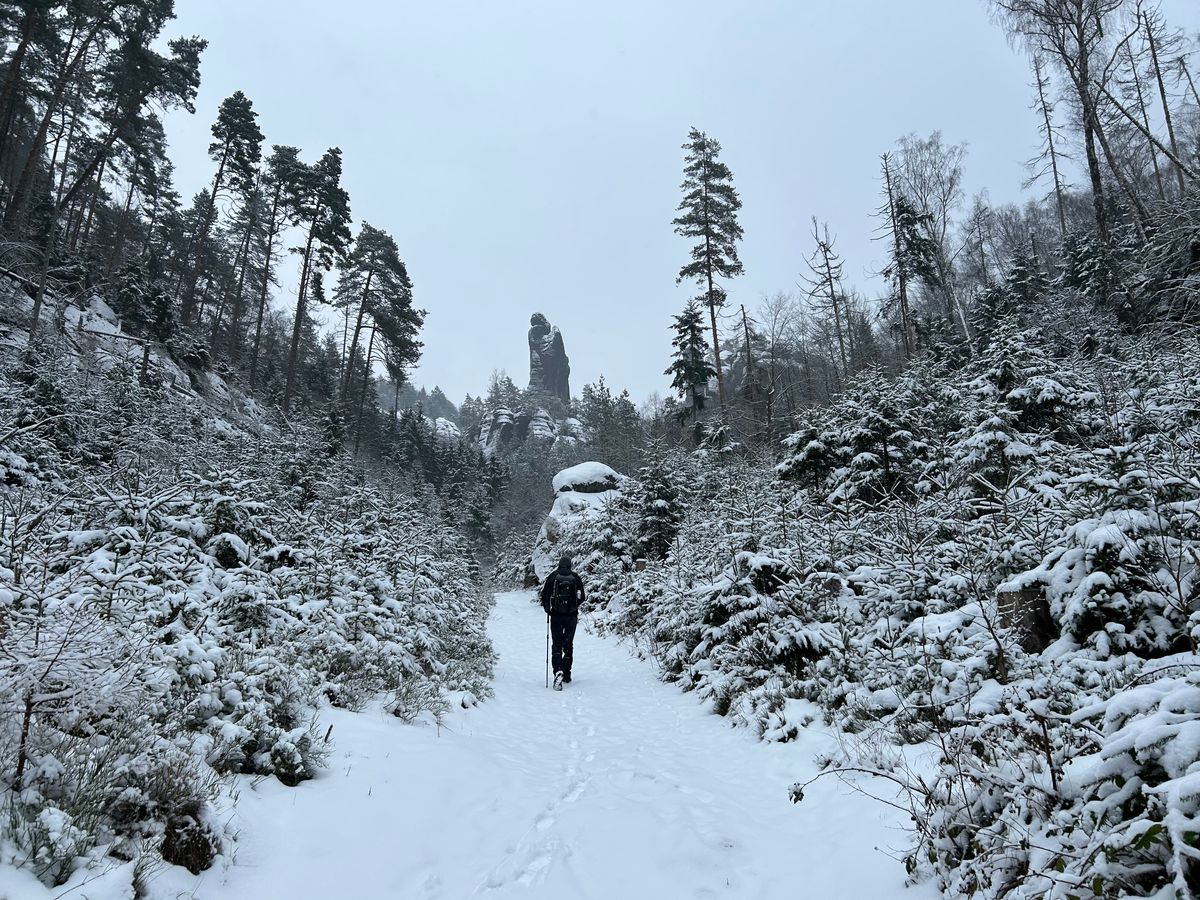
Even though our legs were still carrying the miles from the day before, the trail eased us in with quiet forest tracks and sleepy village lanes on the German side. Winter slows everything down here. Houses felt half-asleep, chimneys drifting smoke, and we kept stopping for photos or a quick snack before moving on.
Schrammsteine stole the show. The ladders, the exposed passages, the views opening up in every direction. It felt like the trail was warming up its tricks before throwing the real challenge at us.
About halfway in, we reached a rocky incline with chains. It looked harmless from a distance, but a thin layer of ice changed that instantly. Even with microspikes, the rock refused to hold us. After a couple of failed attempts and a few controlled slides, we accepted reality and searched for another route. Offline routing on Komoot and AllTrails saved the day, even if it did add an extra two hours.
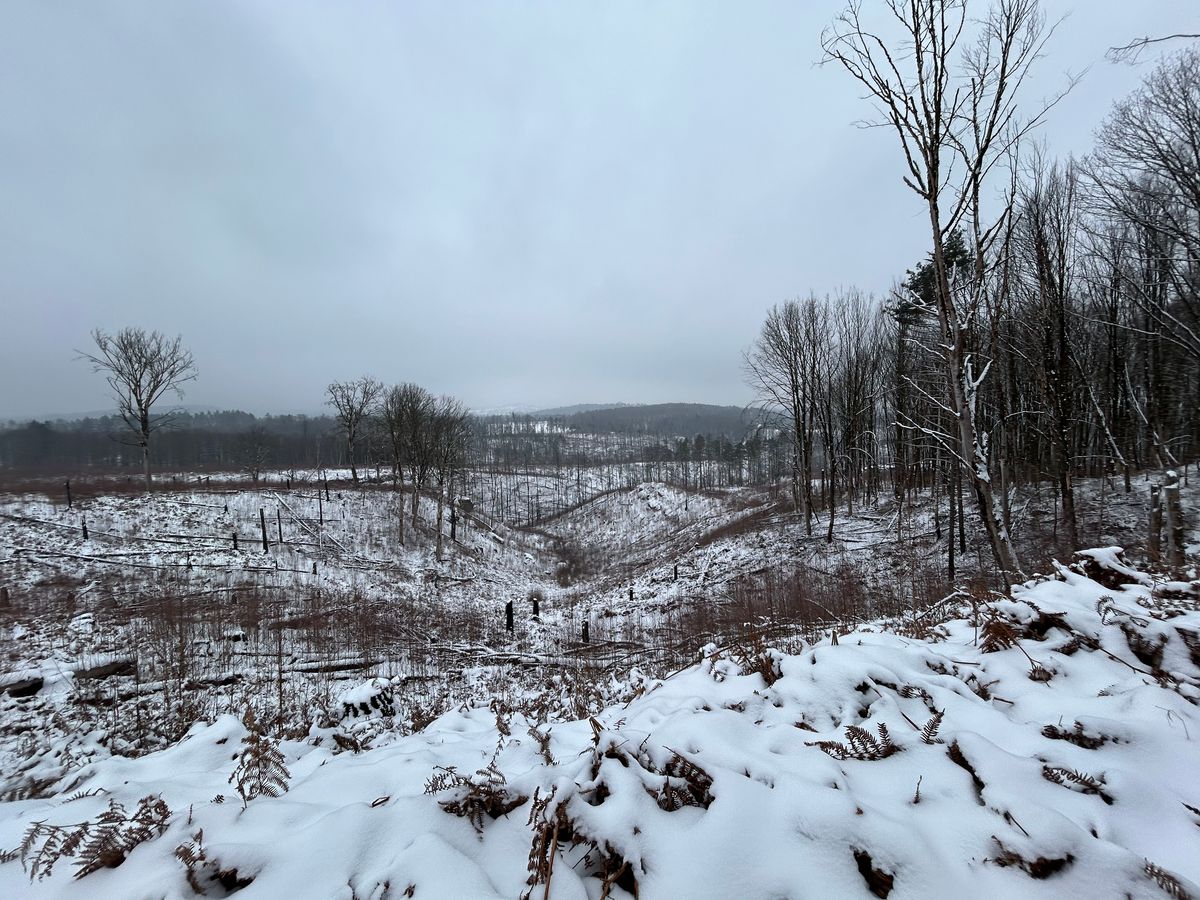
Things changed again when we crossed from Germany into Czechia. The forest looked different right away. Large stretches of burned woodland from the 2022 wildfires were still visible. Blackened tree trunks stood between areas of new growth, and the contrast was impossible to ignore. Seeing such a large area still recovering years later made the whole conversation about impact feel much more real. It was a clear reminder that the small decisions we make while traveling, hiking or just living day to day do add up. When entire hillsides are still marked by past damage, it becomes easier to understand why making small adjustments to reduce our footprint is not theory but practical common sense.
Stats: ~26 km | +810m | 8 - 9 hrs | Difficulty: Hard | View Route
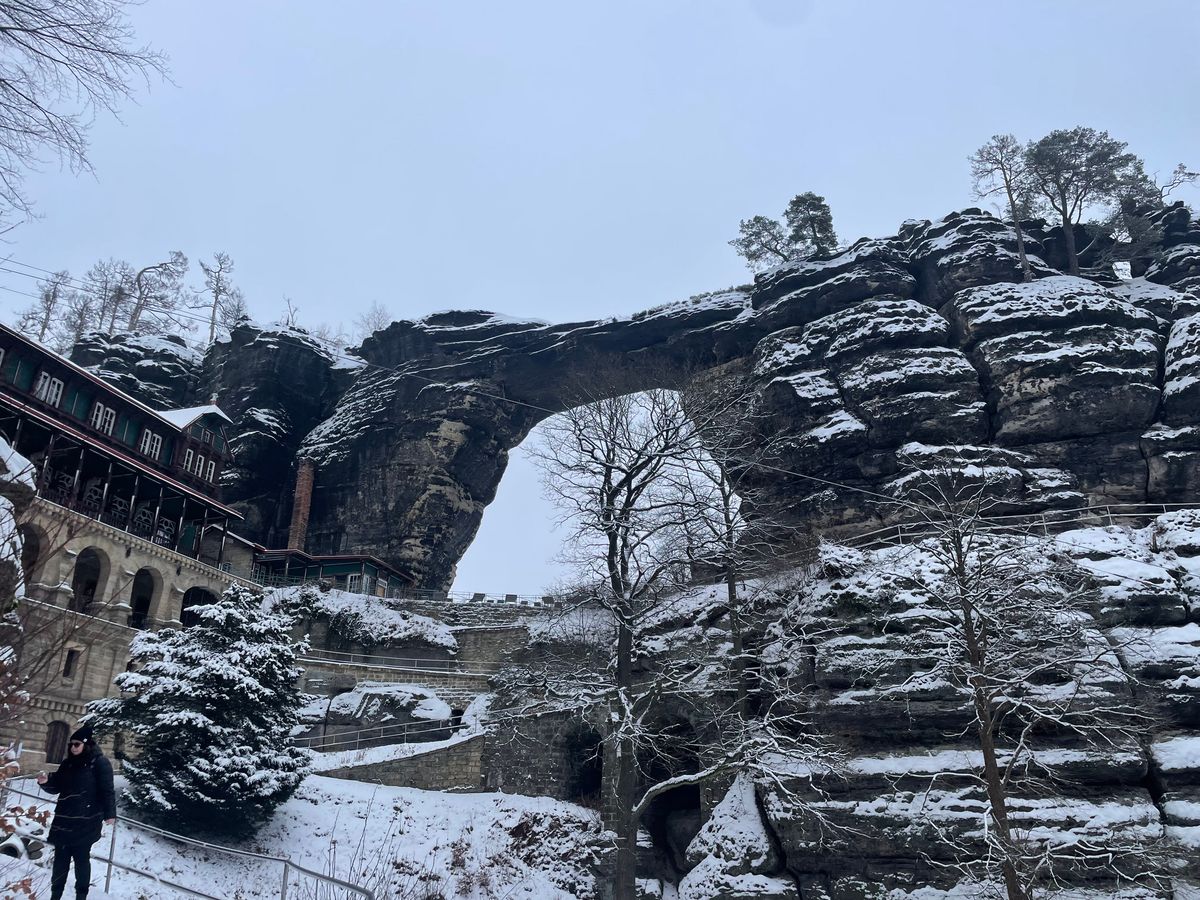
We planned this day to be shorter, expecting our legs to still feel the strain from the previous hikes. Our goal was simple: Pravčická Brána, Europe's largest natural sandstone arch. Since it was winter and outside peak season, it's only open on weekends, and we were lucky that the usual entrance fee was waived.
The trail climbed steadily but never felt aggressive. We put on our microspikes at the start of the incline because the path was iced over. They were essential for the final approach, where a narrow ledge became slippery from shade, wind, and ice. Standing on the platform in winter, even with the valley below feeling mild, we felt exposed to the elements - so we were glad we had all of our extra layers.
There were more hikers here than on the previous days, which makes sense given it's the main attraction. Still, the winter calm kept it from feeling crowded, letting us enjoy the views without the usual summer bustle.
It turned out to be the perfect day to slow down, catch our breath after two long hikes, and take in one of the region's most iconic sights before heading to Hřensko, a large town with plenty of restaurants, shops, and supermarkets to restock.
Stats: ~12 km | +340m | 4 - 5 hrs | Difficulty: Medium | View Route
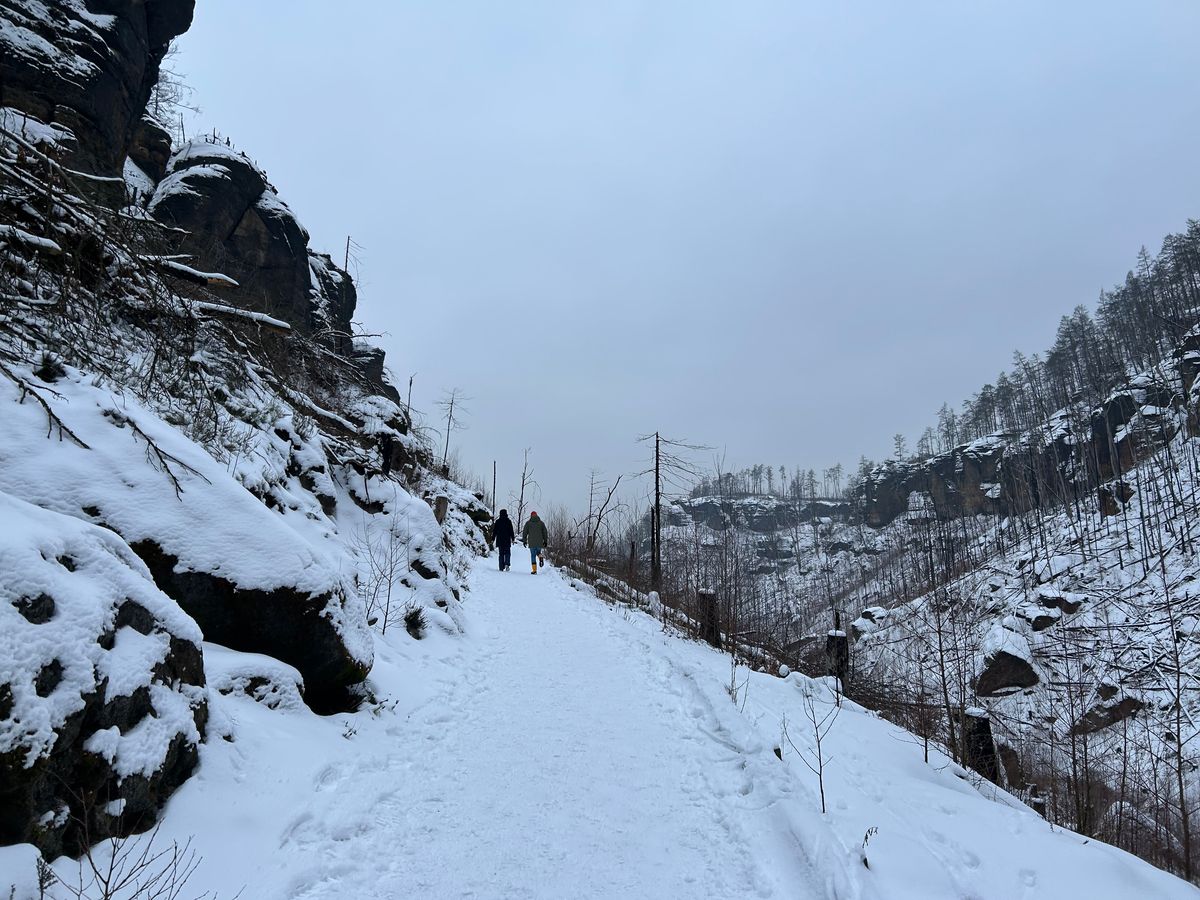
On the final day, we slowed the pace and let the trail set the rhythm. The paths ran gently along the Elbe, giving us time to soak in the quiet river scenery before the climb up a staircase to a few peaceful lookout points. We noticed a few steeper alternative paths early on, but with icy slopes, we decided to stick to the gentler riverside and staircase route---it felt like the right way to end the trip.
We finished in Děčín, a small Czech town that felt perfectly suited for a post-hike wind-down. After days on the trail, it was great to grab a proper meal and a strong local beer. In winter, the pubs were cozy and welcoming, making it easy to relax, warm up, and reflect on the whole multi-day adventure.
Stats: ~18 km | +45m | 5 - 6 hrs | Difficulty: Medium | View Route
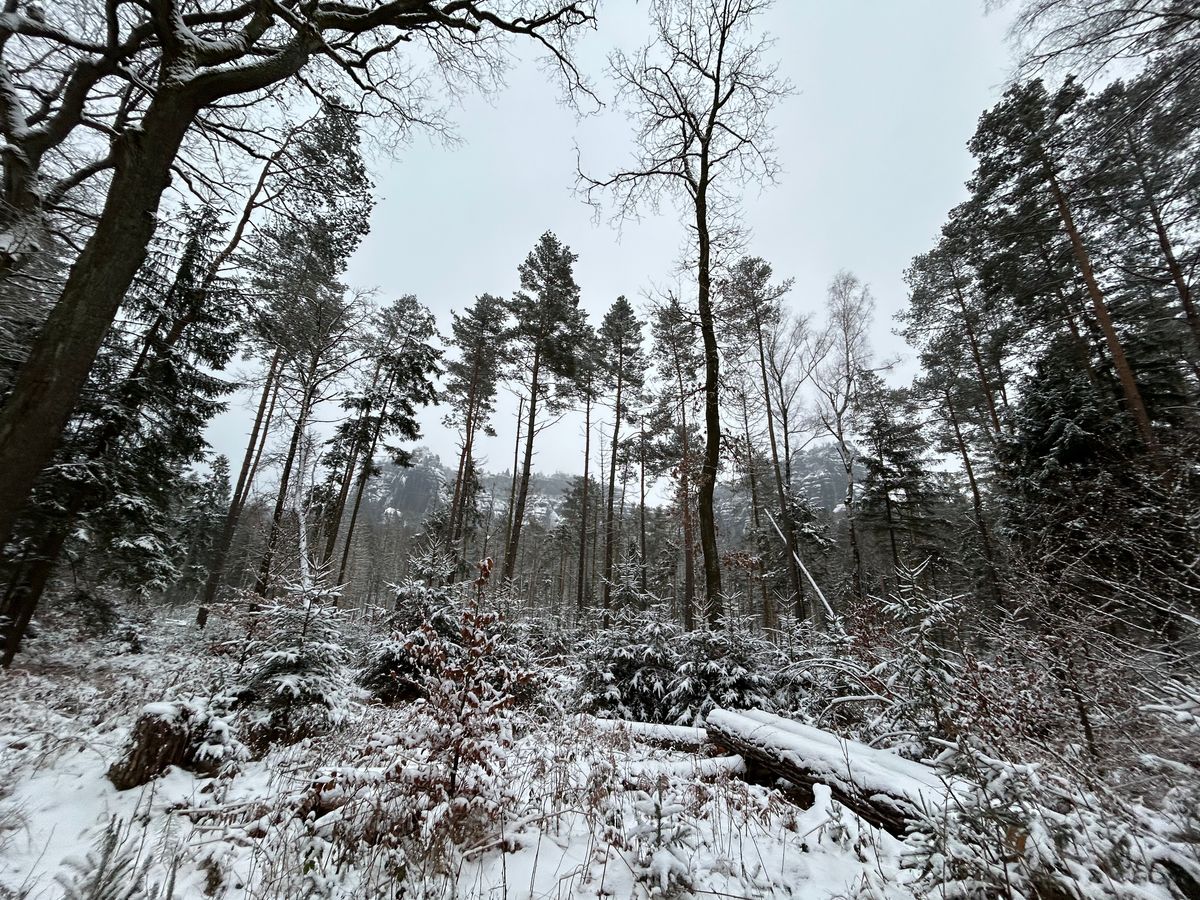
Winter hiking in Saxon and Bohemian Switzerland requires a bit more preparation than a typical summer trek, but the effort pays off. Here's what we learned and what we'd pack if we did it again.
Best Winter Hiking Season: Late winter, around February, usually offers the best mix of stable snow, manageable ice, and decent daylight. Early winter means shorter days and deeper snow, while spring thaw can make trails muddy and slippery.
Footwear: Sturdy, waterproof boots with good ankle support are essential. Trails switch between forest dirt, stone slabs, and ladders, and in winter even thin ice layers on rocks can be tricky. Microspikes give traction where regular crampons would be overkill.
Clothing: Layering is key. We wore base layers, fleece, a waterproof shell, gloves, and hats. Winter sun can warm you on climbs but shaded gorges can feel freezing, so extra layers and wind protection make a huge difference.
Safety: Thin ice can be deceptive. If your microspikes don't grip, don't push it. Backtracking often connects you to a safer alternative path. Slow, steady pacing is far safer than racing through tricky sections.
Navigation: Offline maps on Komoot or AllTrails were lifesavers. Winter conditions can close or block some paths, and rerouting is normal. Mobile signal can drop in remote parts of the park, so download your maps before you leave.
Food & Water: Huts and kiosks are mostly closed in winter, so pack lunch, snacks, and enough water. To ensure a warm & heavy dinner, we chose our hotels only after ensuring that there are restaurants closeby.
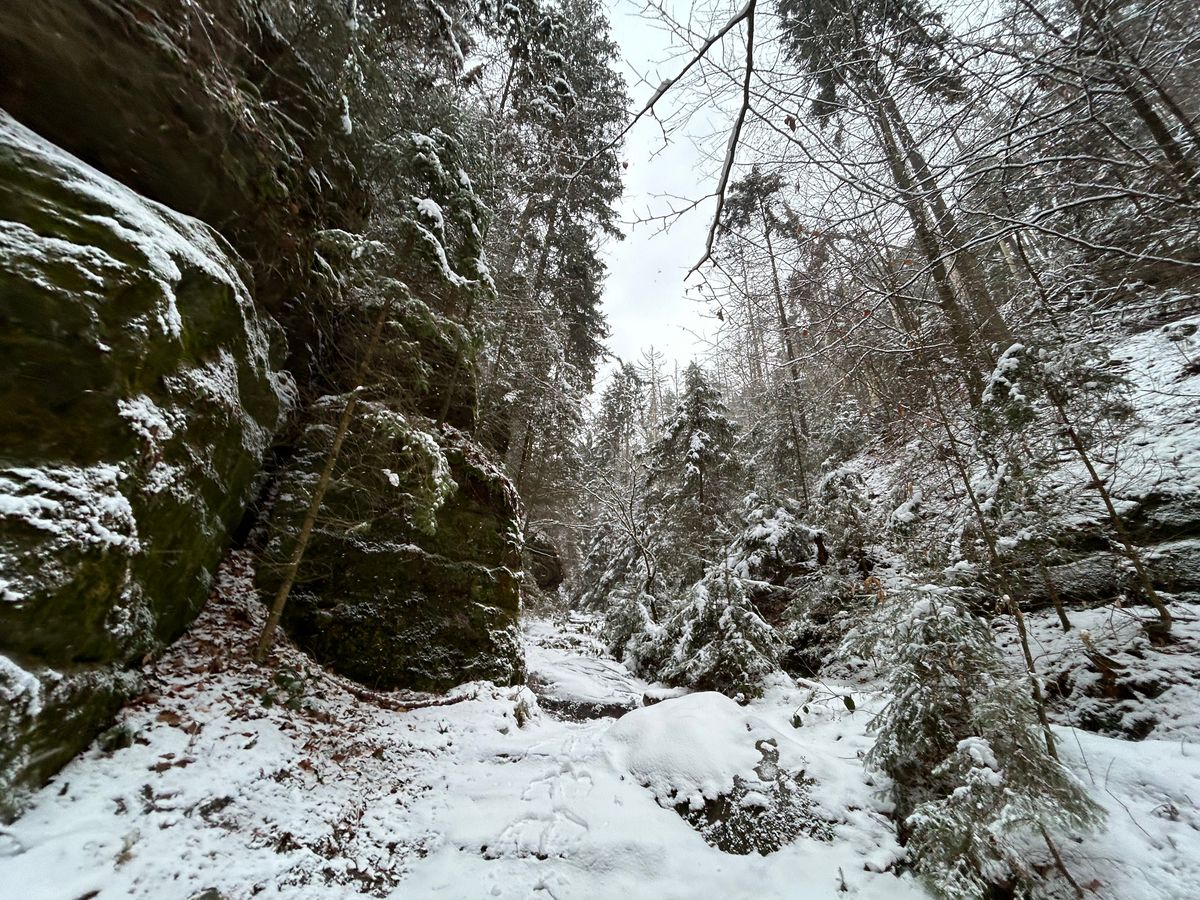
Looking back on the trip, winter hiking in Saxon and Bohemian Switzerland was a completely different experience than summer. The trails felt quieter, the views sharper, and even small challenges like icy patches or unexpected detours added a sense of adventure without feeling unsafe. Planning ahead with microspikes, layers, offline maps, etc made everything feel manageable and let us focus on the landscape rather than the logistics.
Crossing the border, seeing the burned forests, and walking along quiet riversides reminded us how fragile these landscapes are, and how every small choice we make as travelers. Taking trains, staying on trails, respecting nature - all of it matters.
If you're looking for a winter adventure that combines hiking, breathtaking scenery, and a chance to disconnect, this region is hard to beat. Even after a few days on the trail, there's still a sense that the parks have more to give, and every visit leaves you thinking about how to return responsibly.
It's challenging, it's stunning, and it's completely worth the effort.
From the North Sea dunes of the Netherlands to the coasts of Wales and Denmark, chase the wind sustainably by rail

How We Hiked Kinder Scout, Mam Tor & Stanage Edge Without Renting a Car

Have you ever walked across the bottom of the sea? In the Netherlands, you can.

A 4-Day Journey through the Forests, Castles, and Vineyards of Baden-Baden

A complete guide to UK hiking by train - Peak District, Lake District, Snowdonia and the Cairngorms. No car needed.

A 3-Day Adventure in the Swiss Alps

Conquer the High Tatras' Highest Peak on an Accessible Day Hike
Explore by Activity
Hiking
Skiing & Snowboarding
Beach & Surfing
Explore by Country